
Things are slowly picking back up after the summer. We are nearing the end of August, which means—in Scotland, at least—we can safely admit that summer is mostly in the past.
Contrary to my usual Scottish weather pessimism, it felt like we actually had more sunny days this year than last (purely going by memory here; I haven’t dug into the Met Office stats to prove it!). But looking out into the garden reminded me of last year’s unusually wet autumn. Back then, the constant downpours delayed my gardening chores, and I ended up completely skipping trimming my lavenders.
It was only this summer that I learned a painful lesson: if you don’t cut back lavender flowers before winter, they tend to die off unless you happen to have a very specific, indestructible variety. I had faithfully trusted the garden centre labels at Dobbies and B&Q promising “English Lavender – winter hardy for UK conditions!”
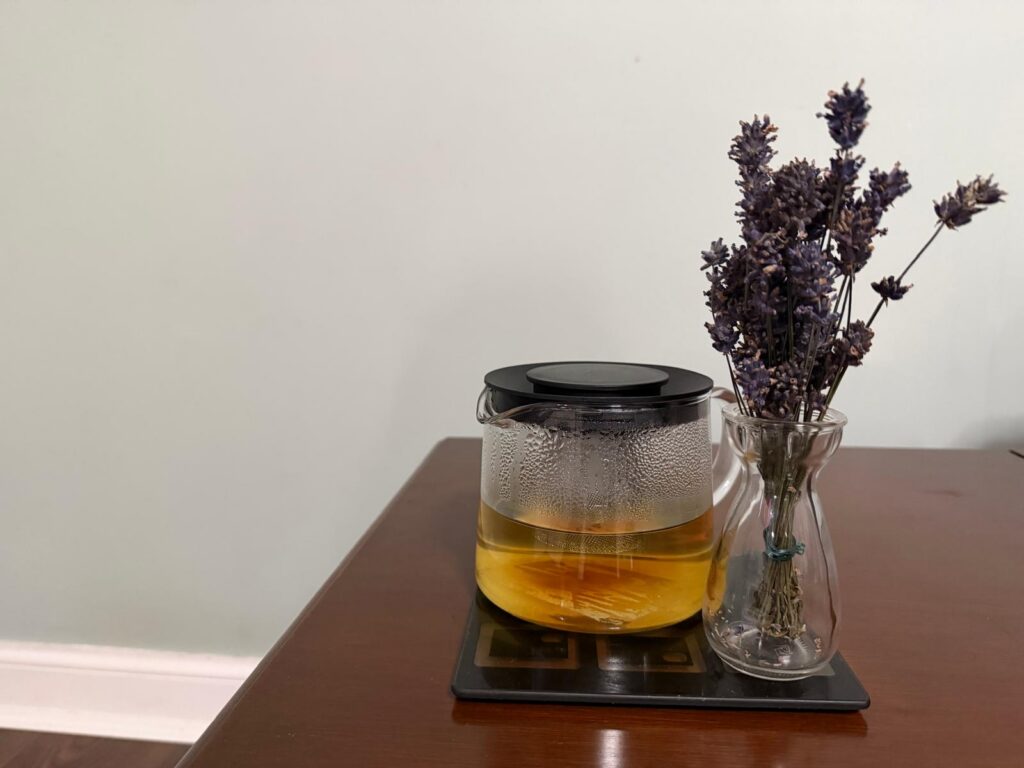
The takeaway for my next plant purchase? Look past the broad “hardiness” label and actually read the specific care instructions. That said, hope springs eternal in the garden—I went right back to the same shop, bought the exact same variety, and have made a stern mental note to trim them post-flowering (fingers crossed I still remember come chilly November!).
Diving Into Dare I Say It
Speaking of paying closer attention to care instructions we were never really handed: the rest of my reading this week took me somewhere quite different.
Earlier in the year, I spotted Dare I Say It: Everything I Wish I’d Known About Menopause by Naomi Watts on Emma Guthrie’s 2025 reading list. I added it to my own queue and finally reached the last page today.
Before diving in, a quick disclaimer: I am not sure I can do full justice to the entirety of the book here. Treat this not as an academic literature review, but rather as a collection of personal reflections and key ideas that resonated with me from her journey. Watts frames the book primarily as a personal memoir, weaving in clinical and scientific research along the way rather than presenting a dry medical paper.
The moment I mentioned to friends or colleagues that I was reading a book on menopause, there were visible squirms. ‘Hmm… uncomfortable topic!’ Some quickly added: ‘I’ll read that in due course—I’m not there yet.’
It struck me how deep the stigma still runs. If simply reading about it makes people uneasy, imagine how difficult it is for a woman to openly say, “I am in menopause.”
Women have long had to navigate the unfair trope of being labeled “emotional” or “hormonal” at the slightest hint of legitimate frustration. My immediate thought was: By naming this phase so explicitly, are we just handing people a convenient new label to dismiss women’s valid reactions as merely ‘menopausal’?
Yet that is precisely why books like this matter. And to be clear: you don’t need to be in perimenopause, menopause, or even be a woman to read it. Understanding the biological and emotional shifts that affect half the population is something everyone benefits from.
Scepticism, Science, and Balance
I’ll admit I started the book with a healthy dose of scepticism. Naomi Watts owns a midlife beauty and wellness brand, and I was slightly wary that the book might turn into an extended product brochure.
Thankfully, it wasn’t that at all. It felt candid, grounded, and refreshingly honest.
A few key themes stood out to me:
- HRT and Lifestyle Are Allies, Not Competitors: Watts is openly pro-Hormone Replacement Therapy (HRT), but she is careful to emphasise that HRT is not a magic wand or a substitute for foundational health habits like resistance training and cardiovascular exercise. They work in tandem, not in competition.
- No One-Size-Fits-All Protocol: A vital caveat throughout is that every woman’s body responds differently. Finding the right therapy, delivery method, and dosage often requires patience and trial-and-error.
- The Complexity of Existing Conditions: For women managing conditions like endometriosis, these decisions become a nuanced balancing act—weighing which symptoms you fear most against the potential risks and benefits of various treatments.
The Silver Linings: Clarity and What Lies Ahead
Beyond the medical and physical aspects, what I found most inspiring were the revelations about midlife psychology.
There is a distinct liberation that seems to arrive with this stage of life: a sudden, refreshing loss of patience for nonsense and social fluff. Along with that comes genuine clarity of thought. As children grow up and prepare to leave the nest (or already have), the rhythm of home changes, creating room for long-overdue “me time.”
It also prompts a natural re-evaluation of our work lives, our ambitions, and a gentle reminder of the finite nature of time—focusing our energy on what truly remains and what we want to do with it.
It’s an open, reassuring read that leaves you feeling informed rather than apprehensive. Highly recommended.

Over to You
Have you read Dare I Say It, or is there another book on health and midlife transitions that reshaped how you think about ageing and work-life balance?
I’d love to hear your thoughts and recommendations in the comments below!

Thanks for sharing these perspectives Priya. So glad that you got something out of this book. Bringing the topic of the menopause into the mainstream feels very important. As with many terms, if it can be normalised and recognised as a stage of life, rather than anything more mysterious, it encourages those who have difficulties or experiences to share to do so in turn.
The lavender remind is timely for me. I have some at the front of my house – the flowers have proved very popular throughout the summer with the bees, but they are dying off now – so some pruning is needed.